
The digital landscape in the UK is increasingly competitive. Businesses in Stamford operate in a market where a strong online presence is not a luxury but a functional necessity. Whether you run a solicitor’s office on High Street, a trades business serving Lincolnshire, or a retail brand shipping nationwide, your website is the entry point to your commercial reputation.
Generic templates can get a website online quickly, but they rarely get results. Custom website design, by contrast, is built around your specific audience, your services, and your goals. It reflects your brand voice, integrates naturally with your SEO strategy, and is structured so that search engines can properly read, index, and rank your content.
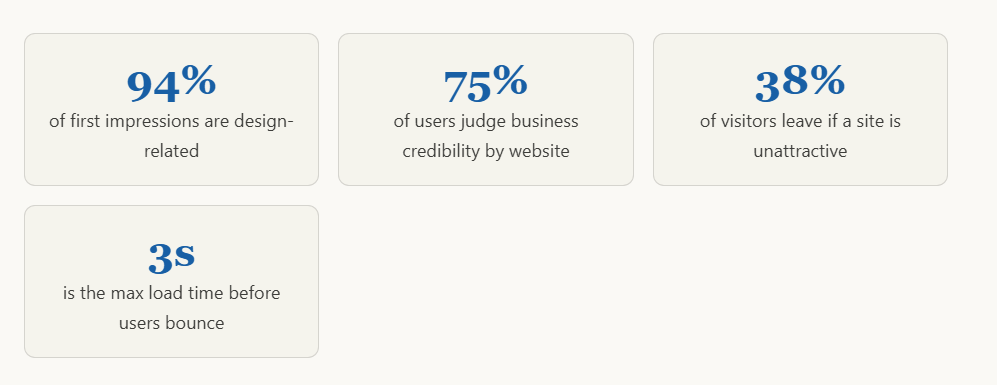
These figures have direct implications for Stamford businesses. A well-crafted, brand-consistent website built with conversion rate optimisation in mind can genuinely shift business outcomes, not just aesthetics.
The Stamford, UK Market Context
Stamford is a historic market town with a distinctive identity. Businesses here benefit from a loyal local customer base and a growing professional services sector. At the same time, they face competition from larger regional and national providers who often have stronger digital presences.
A custom website design gives Stamford businesses a way to compete on quality and relevance, not just budget. With properly structured on-page SEO, localised content, and a brand-aligned visual identity, even a small local firm can outrank much larger competitors in local search results.
What Makes a Website Truly Brand-Aligned
Brand alignment in web design goes far beyond using your logo and brand colours. It means that every element of your website, from the tone of the copy to the choice of photography and the layout of service pages, communicates a coherent message about who your business is and why it should be trusted.
Visual Identity and Design Language
Your brand’s visual identity includes your colour palette, typography, imagery style, and iconography. A properly custom website design system takes these elements and translates them into a digital environment. This includes building consistent button styles, heading hierarchies, and spacing rules that make your site feel deliberate rather than assembled from parts.
Brand Voice and Copywriting Tone
The words on your website are as much a part of your brand as the design. A professional law firm in Stamford should sound measured and authoritative. A family-run restaurant should feel warm and welcoming. A tech consultancy should project precision and competence. Custom website design includes aligning the written tone with the visual presentation so both tell the same story.
User Journey and Conversion Architecture
Brand alignment also means the structure of your website reflects how your customers actually buy. If your audience typically needs to see case studies and testimonials before making contact, that journey should be built into the site architecture. If they prefer quick quotes or immediate contact options, those need to be prominent and frictionless.
Brand-aligned custom website design is not decoration. It is a strategic tool that builds trust with visitors, reduces bounce rates, and increases the probability that someone who arrives on your site will take the action you need them to take.
Custom Website Design vs Template: A Real Comparison
This is one of the most common decisions businesses face. Template platforms like Wix, Squarespace, or basic WordPress themes are widely used, and they have genuine advantages in terms of speed and cost at the start. But understanding what they trade off is important before committing.
| Feature | Template Website | Custom Website Design (SEO Stamford) |
|---|---|---|
| Initial setup time | Days | Weeks (tailored build) |
| Brand consistency | Partial | Full |
| Technical SEO control | Limited | Complete |
| Page speed optimisation | Often poor (bloated code) | Optimised from build |
| Schema markup support | Plugin-dependent | Built-in by default |
| Mobile responsiveness | Partial (template-defined) | Fully tailored |
| Scalability | Template constraints apply | Unlimited |
| Local SEO integration | Manual workarounds | Native to the build |
| Conversion rate optimisation | Generic CTAs only | Journey-specific |
| Long-term ROI | Lower | Significantly higher |
The argument for templates is usually cost. But the argument for custom website design is return on investment. A template site that ranks poorly, converts poorly, and needs constant workarounds may cost more over three years than a well-built custom site that works properly from day one.
How SEO Stamford Approaches Custom Website Design
At SEO Stamford, the process of building a website is not treated as a design task with an SEO checklist tacked on at the end. SEO and design are treated as a single, unified discipline from the very first conversation.
Phase One: Strategy and Discovery
Before any wireframe is drawn, the team conducts a thorough discovery session. This includes understanding your business model, your target customer personas, the competitive landscape in your sector, your existing brand guidelines, and your measurable goals for the website. This is where keyword research, competitor gap analysis, and content architecture planning all begin.
Phase Two: Information Architecture and Wireframing
The site structure is planned before the visual design begins. Every page has a defined purpose, a primary keyword target, a user journey role, and a clear call to action. Internal linking strategies are mapped at this stage so that page authority flows correctly through the site from day one.
Phase Three: Visual Design
The visual design is built around your brand identity. Typography systems, colour usage rules, spacing principles, and component libraries are all established to ensure consistency across every page. Accessibility standards are incorporated throughout, which also benefits search engine performance.
Phase Four: Development and Technical Integration
The build phase prioritises clean, semantic HTML, fast-loading assets, correctly structured heading hierarchies, proper metadata, canonical URLs, schema markup, and optimised image delivery. Nothing is added that does not serve either the user or the search engine.
Phase Five: Testing, Launch, and Ongoing Support
Before going live, every page is tested across devices, browsers, and screen sizes. Core Web Vitals scores are reviewed and improved where needed. After launch, SEO Stamford continues to monitor performance and provides support for content updates, technical changes, and ranking improvements over time.
Core Elements of a High-Performing Business Website
Semantic HTML Structure and Heading Hierarchy
Search engines read your website like a document. A properly structured site uses a single H1 per page that reflects the primary keyword, followed by H2 headings for major sections, and H3 or H4 subheadings for supporting content. This heading hierarchy is not just for SEO. It also makes your content more readable for users and compatible with screen readers, which is important for accessibility compliance in the UK.
Core Web Vitals and Page Experience
Google uses Core Web Vitals as a ranking signal. These include Largest Contentful Paint (LCP), which measures load performance; Cumulative Layout Shift (CLS), which measures visual stability; and Interaction to Next Paint (INP), which measures interactivity responsiveness. A custom website designed with these metrics in mind will consistently outperform template-based sites in page experience scores.
What Good Core Web Vitals Scores Look Like
| Metric | Good | Needs Improvement | Poor |
|---|---|---|---|
| LCP (load speed) | Under 2.5s | 2.5s to 4.0s | Over 4.0s |
| CLS (visual stability) | Under 0.1 | 0.1 to 0.25 | Over 0.25 |
| INP (responsiveness) | Under 200ms | 200ms to 500ms | Over 500ms |
On-Page SEO Fundamentals
Each page on your custom website should be built with a clear primary keyword and a set of semantically related terms. Title tags, meta descriptions, image alt text, internal anchor text, and URL slugs all need to be purposefully written. This is not about keyword stuffing but about giving search engines complete, contextually rich signals about what each page is about and who it is for.
Conversion Rate Optimisation (CRO) Elements
A website that ranks well but does not convert is still failing its business. Conversion rate optimisation is built into every page of a custom website design through clear and compelling calls to action, trust signals such as testimonials and accreditations, social proof elements, contact form placement, and clear value proposition statements above the fold.
Content Structure for E-E-A-T
Google’s quality rater guidelines prioritise content that demonstrates Experience, Expertise, Authoritativeness, and Trustworthiness. For Stamford businesses, this means building pages that reflect genuine local knowledge, professional qualifications, real client outcomes, and transparent business information. Custom website design allows these signals to be embedded naturally throughout the site structure rather than added as afterthoughts.
Real Example: A Stamford Business Before and After
To make this concrete, consider how a mid-sized building and renovation contractor based in Stamford, Lincolnshire approached their website challenge.
Real-World Example
The situation: A local building contractor had been using a Wix template website for three years. The site had no structured service pages, no schema markup, no local SEO signals, poor mobile performance, and a homepage that was essentially a brochure with no call to action. Organic traffic was minimal, and most enquiries came through word of mouth alone.
After Custom Website Design
The outcome: After commissioning a custom website design, the business had individual optimised pages for each service area, including loft conversions, extensions, and refurbishments. Each page targeted specific geographic and service keywords. The site was built on clean code with proper schema markup for a local business, fast load times under 2 seconds, and a clearly designed user journey ending in a quote request form. Within five months, organic search traffic increased by over 180%, and the site became the primary source of new enquiries.
This is not an unusual outcome. It is the predictable result of combining brand-aligned design with properly integrated search engine optimisation. The template was holding the business back. The custom website design unlocked what was already there.
Technical SEO Built Into Every Page
One of the most significant advantages of working with SEO Stamford on a custom website design is that technical SEO is not retrofitted after the build. It is woven into every decision from the start.
Schema Markup and Structured Data
Schema markup communicates directly with search engines about the type of content on each page. For a Stamford business, this includes local business schema (with NAP data for name, address, and phone number), service schema, review schema, and FAQ schema where applicable. This structured data helps search engines understand and represent your content more accurately, which can improve click-through rates through rich results in search pages.
XML Sitemaps and Crawl Efficiency
A custom website includes a properly generated and maintained XML sitemap that tells search engines exactly which pages should be crawled and indexed. Combined with a robots.txt file that prevents crawlers from wasting resources on non-essential pages, this ensures that your most important content gets the indexing attention it deserves.
Canonical Tags and Duplicate Content Control
Duplicate content is a common problem with template-based sites that generate multiple versions of the same page through pagination or filtering. Custom website design handles this from the build through canonical tag implementation, ensuring that search engine authority is not diluted across duplicate URLs.
Internal Linking Strategy
Internal links pass page authority through your website and guide users to related content that keeps them engaged. A custom website design maps these relationships intentionally, ensuring that your most commercially important pages receive link equity from supporting content pages across the site.
Mobile Responsiveness and User Experience
Google operates on a mobile-first indexing model, meaning the mobile version of your site is the primary version used for ranking purposes. A template site’s mobile responsiveness is constrained by whatever the template allows. A custom website design is built responsively from the ground up, meaning every element adapts naturally to any screen size without compromising the design or the user experience.
Touchpoint Design and Navigation
Mobile users interact with websites differently from desktop users. Tap targets need to be large enough to use accurately, menus need to be accessible without hovering, and content needs to reflow sensibly on smaller screens. Custom website design accounts for all of these touchpoint requirements rather than assuming that a scaled-down desktop layout will work.
Performance on Mobile Networks
Image optimisation, lazy loading, minified CSS and JavaScript, and efficient font loading all contribute to how quickly your site loads on mobile networks. These technical decisions are made consciously in a custom website design process, whereas template platforms often load heavy, unnecessary resources that slow down mobile performance and hurt rankings.
Local SEO and Geographic Relevance for Stamford, UK
For most businesses in Stamford, the majority of their customers come from a defined local area. Local SEO is the practice of making your website as visible as possible to people searching for services in your geographic area, whether that is Stamford itself, surrounding villages, or the broader Lincolnshire and Rutland region.
Google Business Profile Integration
A custom website design includes structured data and NAP consistency that aligns with your Google Business Profile. This alignment strengthens the trust signals that Google uses to verify local business legitimacy, which directly affects your ranking in local search results and the Local Pack.
Location-Specific Landing Pages
If your business serves multiple areas around Stamford, individual location-specific pages can be built into the site architecture. Each page is written to be genuinely useful to people in that location, not just a thin page with a postcode swapped out. This approach expands your geographic keyword footprint considerably without compromising quality.
Local Link Building and Citation Consistency
A properly built website is also the foundation for off-page local SEO activities including citation building in UK business directories, outreach for local links, and reputation management through review integration. SEO Stamford supports these activities as part of its ongoing service offering.
Local search in the UK is highly intent-driven. When someone searches for a service in Stamford, they are typically ready to buy or make contact. A well-optimised custom website design positions your business to capture that intent at exactly the right moment.

Why SEO Stamford Is the Right Partner for Your Website
There are many web design agencies in the UK, and a number of them do good work. What makes SEO Stamford different is the combination of deep local market knowledge, integrated SEO practice, and a process that treats your website as a business tool rather than a creative output.
The team at SEO Stamford has worked with businesses across professional services, trades, retail, hospitality, and health and wellness sectors in Stamford and the surrounding area. That means they understand the specific keywords local customers use, the local competitive landscape, and the expectations that Stamford audiences bring to the businesses they consider.
Every custom website design project begins and ends with your commercial goals. The measure of success is not how the site looks on an award submission. It is how many qualified leads it generates, how well it ranks for the terms your customers use, and how effectively it communicates your brand value to someone who has never heard of your business before.
Frequently Asked Questions
How long does a custom website design project typically take?
The timeline depends on the scope and complexity of the project. A standard custom website for a service business in Stamford typically takes between six and twelve weeks from the initial discovery session to launch. More complex projects, such as large e-commerce sites or multi-location business websites, take longer. Rushing the process creates problems. A properly planned timeline produces a better result.
How much does custom website design cost in Stamford?
Custom website design is an investment, and the cost reflects the level of work, expertise, and strategic thinking involved. Prices vary depending on the number of pages, the complexity of functionality required, and the degree of content work included. At SEO Stamford, we provide detailed project proposals after the discovery phase so that the investment is clearly defined before any work begins.
Will my custom website rank on Google?
A well-built custom website with proper SEO architecture, strong content, and a sound technical foundation is positioned to rank well in Google search. However, search rankings are also influenced by ongoing content development, link building, and continued SEO work. Custom website design is the foundation. SEO is the ongoing strategy built on that foundation.
Can I update my custom website myself after launch?
Yes. At SEO Stamford, we build websites with user-friendly content management systems that allow you to update text, images, and other content without technical knowledge. We also provide training and documentation to ensure you feel confident managing your site.
What makes SEO Stamford different from other web design agencies?
Our integration of SEO strategy into the design and development process from day one is the primary differentiator. Many web design agencies treat SEO as a separate service. We treat it as an inseparable part of building a website that works commercially. Our focus is specifically on businesses in Stamford and the surrounding area, which means our design and strategy work reflects a genuine understanding of the local market.
Do you work with businesses that already have a website?
Absolutely. Many of our projects involve businesses that have an existing website and need either a redesign or a full rebuild. We assess the existing site thoroughly before making recommendations, including reviewing its current search performance, technical condition, and alignment with the business brand.
What industries do you work with in Stamford?
We work with a wide range of businesses across Stamford, including professional services, retail, hospitality, healthcare, property, construction, and more. The custom website design process adapts to each industry’s specific requirements, audience, and competitive landscape.
How important is ongoing maintenance for a custom website?
Very important. A website without ongoing maintenance gradually develops security vulnerabilities, performance issues, and compatibility problems as browsers and devices evolve. Regular maintenance keeps the site secure, fast, and functioning properly. It also provides the opportunity to make incremental improvements based on performance data.
Will my website work properly on all devices?
Yes. Responsive design across all devices and screen sizes is a standard element of every custom website we build at SEO Stamford. We test thoroughly across mobile, tablet, and desktop before launch.
What happens if I need additional pages or features after launch?
Custom websites are built to be scalable. Adding new pages, sections, or functionality after launch is straightforward because the underlying architecture is designed to accommodate growth. This is one of the significant practical advantages of custom design over template solutions.